
What affordable senior apartments cost in Texas
By Leo Ellis · Updated 2026-06-26
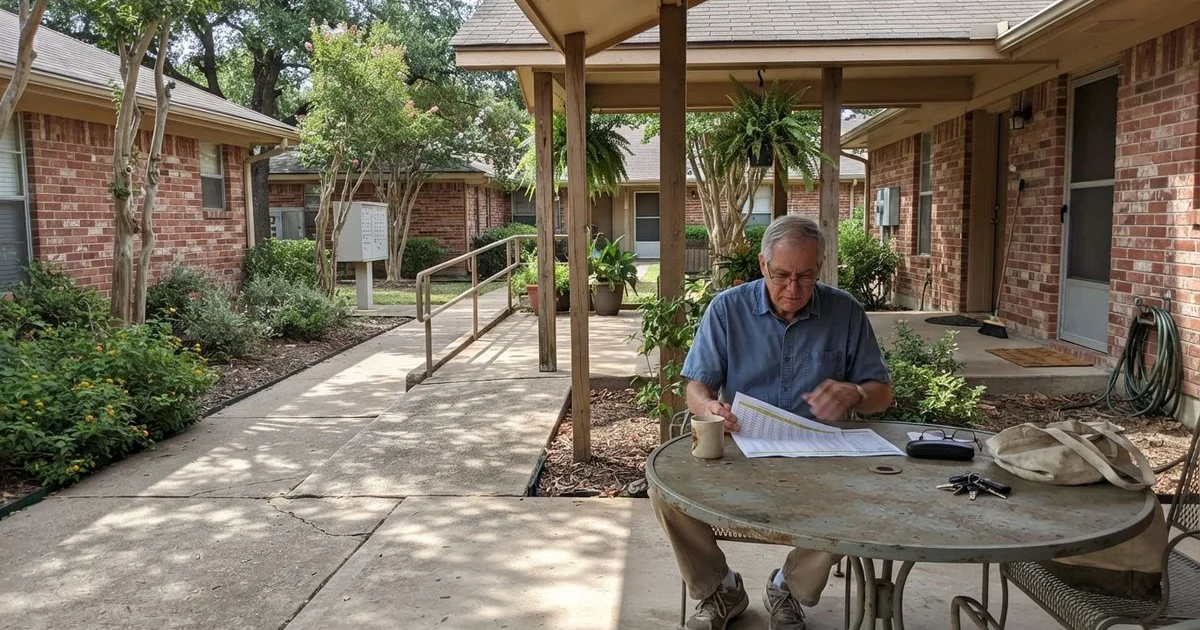
Senior housing costs work differently enough from general low income housing that it deserves its own look, since retirement income, medical expenses, and a narrower range of household sizes all change the math. Here’s what to actually expect before you tour a property.
How rent is calculated for seniors
The underlying models are the same as general affordable housing: either your rent is set at roughly 30 percent of your adjusted income, or it’s capped at a fixed amount tied to the area median income under a program like the Low-Income Housing Tax Credit or Section 202 supportive housing for seniors. The difference for seniors is what counts as income and what can be deducted. Social Security, pensions, and most retirement income count, but many programs allow a deduction for out-of-pocket medical expenses above a certain threshold, which can lower your calculated rent meaningfully if your medical costs are high.
What shows up on the bill
| Cost item | Typical range or rule | Notes |
|---|---|---|
| Base rent | ~30% of adjusted income, or a fixed cap | Medical expense deductions can lower this |
| Utilities | Sometimes included, sometimes not | Ask for the specific utility allowance |
| Meals or care services | Not included in most independent senior housing | A separate, usually costlier category |
| Application/screening fee | $0 to $50 typically | Ask if a fee waiver exists for fixed-income applicants |
These are typical patterns; each property sets its own figures under its funding program’s rules.

Independent living versus supportive housing
It matters which category a property falls into. Independent senior apartments are just housing: your own unit, no included meals or personal care, similar in structure to a general affordable apartment but often smaller and age-restricted. Supportive senior housing, sometimes tied to Section 202 funding, layers in service coordination, and in some cases meals or light assistance, which typically costs more or requires additional program eligibility beyond just age and income. Ask specifically which category a property falls into before assuming a low quoted rent includes services it doesn’t.
Unit size and what to expect
Most senior programs assign roughly one bedroom for one to two occupants, so a single senior typically qualifies for a studio or one-bedroom rather than a larger unit, even if a two-bedroom would be more comfortable. If a live-in caregiver or aide is part of your situation, ask upfront whether the property accommodates an additional bedroom or occupant for that reason, since policies vary by property.
Budgeting realistically on a fixed income
The biggest complaint we hear from seniors isn’t the base rent, it’s utility costs during Texas summers when air conditioning runs constantly, and unexpected fees like a background check charge that a fixed income doesn’t easily absorb. Ask for the property’s utility allowance in writing and ask whether any application fees are waived for seniors on a fixed income, since some properties do offer this and it’s worth asking rather than assuming.
Questions worth asking before you sign
A few questions consistently save seniors from surprises later. Ask whether the quoted rent is fixed under a tax credit program or recalculated annually based on income, since the two behave very differently if your Social Security cost-of-living adjustment changes your income slightly each year. Ask what the medical expense deduction process looks like and what documentation counts, since some properties require original receipts while others accept a simple written statement from a provider. And ask directly what happens at recertification: some properties send a reminder well in advance, others expect the resident to initiate it, and missing that window can temporarily affect your rent calculation.
It also helps to ask about the waiting list specifically for the unit size you need. A one-bedroom often moves faster than a studio at some properties and slower at others, with no consistent pattern across the state, so the only reliable way to know is to ask the specific property rather than assume based on what a friend or relative experienced elsewhere.
Where to look
Our directory of senior low income housing across Texas lists communities with published details where available, and our ranking method explains how we weigh cost transparency and condition when scoring senior housing listings. Our directory also covers general and family housing if a senior-specific property doesn’t fit your household. If you’re helping a parent through this process rather than applying for yourself, see our guide on helping an aging parent apply for senior low income housing.
This guide describes typical cost patterns and is general information, not a quote for any specific property; actual rent and fees are set by each property and its funding program.
FAQ
- How is rent set at a senior low income apartment?
- Most senior properties use the same models as general affordable housing: either a percentage of your adjusted income, commonly around 30 percent, or a fixed rent capped under a program like the Low-Income Housing Tax Credit or Section 202.
- Is Social Security income counted when figuring out my rent?
- Yes, Social Security, pension income, and most retirement benefits count toward your adjusted income calculation, though certain medical expense deductions can lower the income figure used to set your rent.
- Do senior apartments include meals or care services in the rent?
- Usually not automatically. Independent senior apartments are typically housing only, while assisted living or supportive senior housing that includes meals or care is a different, usually more expensive, category.
- What's the minimum age to qualify for senior low income housing?
- Most properties set the minimum age at 55 or 62, though this varies by property and program, so check the specific age requirement before applying rather than assuming a single statewide rule.