
How to spot a low income housing scam in Texas
By Leo Ellis · Updated 2026-07-08
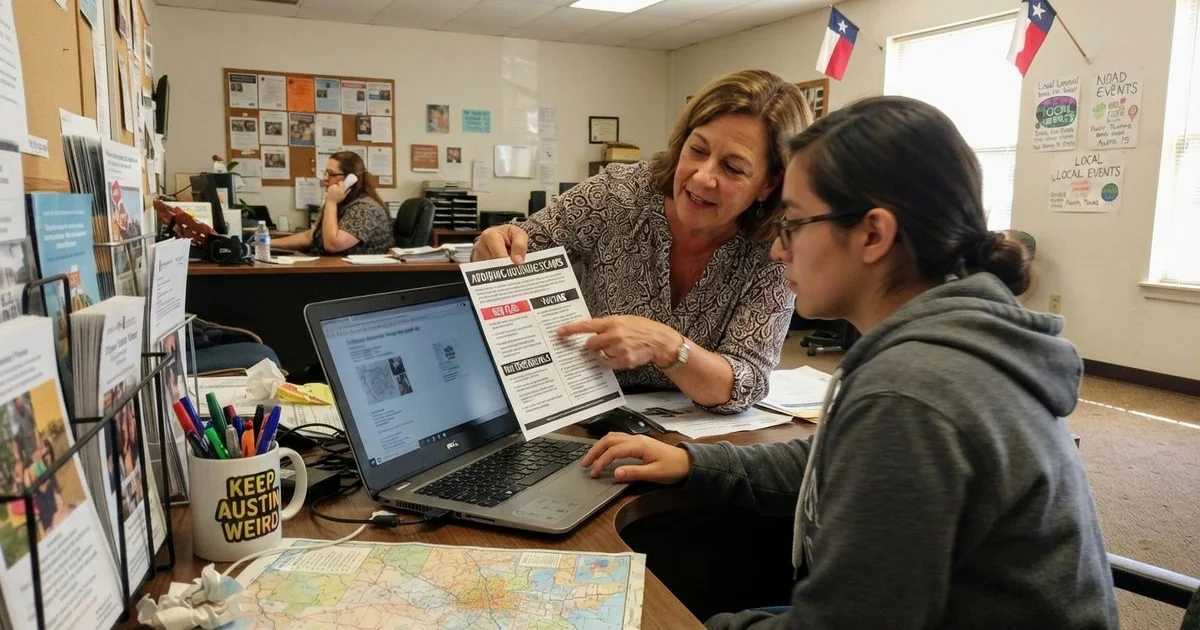
Waiting lists and financial stress make low income housing an attractive target for scams, and the corpus of housing programs we track consistently flags disorganized communication and slow, opaque processes as real tenant complaints, the same conditions scammers exploit to look legitimate. Here’s how to tell the difference.
The biggest red flag: payment upfront
Legitimate public housing authorities never charge a fee to apply for a Section 8 voucher or public housing. Some private properties do charge a modest, clearly disclosed application or screening fee, typically under $50, but a request for a large upfront payment, a “list placement fee,” or payment by gift card or wire transfer to secure your spot is not how any legitimate program operates. If a request feels urgent and payment-focused before you’ve even seen the unit, stop and verify independently before sending anything.
Common scam patterns to watch for
| Red flag | Why it’s suspicious |
|---|---|
| Unsolicited “you’re approved” message | Legitimate approvals follow an application you submitted |
| Request for gift cards or wire transfer | Not a standard payment method for any government program |
| Pressure to act within hours | Real waiting lists don’t disappear overnight |
| No verifiable address or license | Legitimate PHAs and nonprofits are publicly registered |
| Request for a Social Security number by unsecured email | A real intake process uses secure or in-person verification |
How to verify before you engage
Search for the organization independently rather than trusting only the phone number or link in the message you received. Public housing authorities and legitimate nonprofits have a public presence, often with a government or established nonprofit web domain, and are listed in official directories. Our directory cross-references housing programs and nonprofits across Texas, which is a useful independent check before you share personal information with an organization you haven’t dealt with before.
Why disorganized communication makes this harder
One of the more frustrating realities in this space is that some legitimate programs are themselves slow, hard to reach by phone, or inconsistent in their communication, the exact same qualities that make a scam plausible. This doesn’t mean every unresponsive housing authority is fraudulent, far from it, but it does mean you can’t use “they’re hard to reach” alone to judge legitimacy. Instead, verify through an independent source: a government website, a known nonprofit registry, or a directory that has already vetted the organization.
If you think you’ve been scammed
Stop all payment and communication immediately. Report it to the Texas Attorney General’s Consumer Protection Division and the Federal Trade Commission, both of which take housing scam reports and can pursue enforcement. If you can identify the legitimate organization being impersonated, let them know too, since they may already be tracking similar reports and can warn other applicants.
Scams that mimic real programs closely
Some scams don’t invent a fake program at all, they impersonate a real housing authority or well-known nonprofit almost exactly, using a similar name, a copied logo, or a phone number that resembles the real one by a digit or two. This is harder to catch than an obviously fake offer. If something feels slightly off, a website with typos, an email domain that doesn’t quite match the organization’s real one, or a caller who can’t answer basic questions a real staff member would know, call the organization back using a number you looked up independently, not the one the message gave you.
Staying safe while you search
Apply directly through official channels: a housing authority’s own website or office, or a property’s verified management company, rather than through a link or number forwarded by someone you don’t know. Our ranking method explains how we vet the housing programs and nonprofits listed in our directory, which is designed to give you a verified starting point rather than a cold search result. If you’re dealing with a landlord dispute rather than a suspected scam, see our guide on tenant rights and fair housing protections for what’s actually covered by law.
This is general information about common scam patterns, not a determination about any specific organization or offer. If you’re unsure, verify independently before sending money or personal information.
FAQ
- Do legitimate housing programs ever ask for payment upfront?
- Legitimate public housing authorities never charge to apply for a voucher or public housing. Some properties charge a modest, disclosed application or screening fee, but never a large upfront payment to secure a spot on a waiting list.
- How can I verify a housing authority or nonprofit is real?
- Look it up independently rather than relying only on the contact information in an email or flyer, and cross-check it against an established directory or the organization's official government or nonprofit registration.
- What if someone contacts me saying I've been approved for housing I never applied for?
- Treat this as a major red flag. Legitimate housing offers come after an application you submitted, not as an unsolicited approval, and this is one of the most common patterns in housing scams.
- Where do I report a suspected housing scam in Texas?
- Report it to the Texas Attorney General's Consumer Protection Division and to the Federal Trade Commission, and also alert the legitimate organization being impersonated if you can identify one.