Income Based Apartments Guide
Menu

Disability & Supportive Housing in Austin

Disability & Supportive Housing in Texas

What this category covers

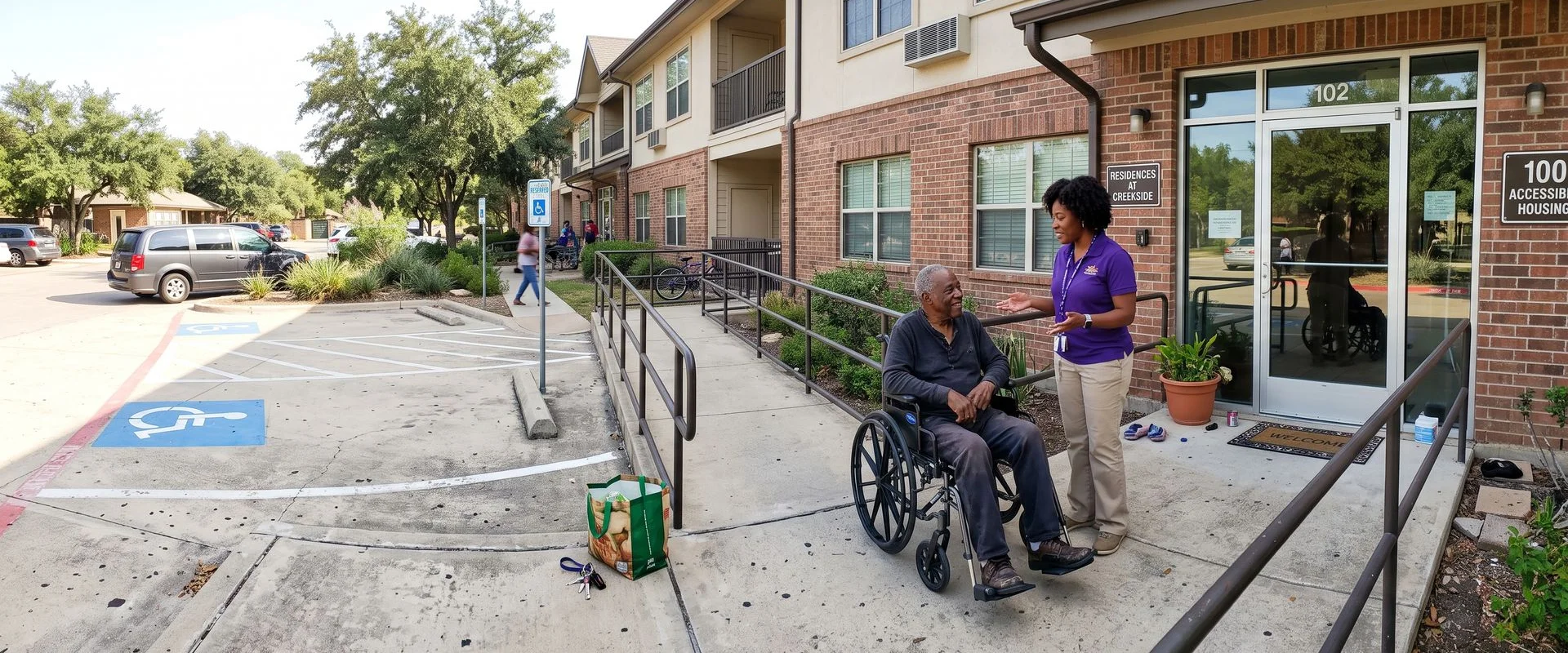
Disability and supportive housing programs combine an affordable place to live with services meant to help residents stay stable and independent. In Austin, that can mean units set aside for people with physical disabilities, mental health conditions, intellectual or developmental disabilities, or a history of homelessness tied to a disabling condition. Some properties are straightforward apartment communities with accessible units and rent capped to income. Others come paired with case management, on-site nursing or behavioral health staff, life-skills coaching, or connections to Medicaid waiver services. We've identified 7 providers in the Austin area operating in this space, ranging from HUD Section 811-funded buildings to nonprofit-run supportive housing with wraparound staff.

What to look for before you apply

Start with what the unit actually offers: is it wheelchair accessible, does it have roll-in showers or grab bars, and are there elevators if it's a multi-story building? Then look at the service side. Ask who provides case management, how often staff are on-site, and whether services are mandatory or optional. Check the waitlist length, since supportive housing in Austin often runs long, and ask directly what documentation of disability is required (SSI/SSDI award letter, doctor's statement, or a specific diagnosis). Find out if rent is a flat percentage of income (commonly 30%) or a fixed subsidized rate, and whether utilities are included.

How we score providers

Our rankings weigh accessibility features, staff availability, responsiveness to applicants, and how clearly each provider communicates eligibility and wait times. See the full ranked guide to Austin's low income housing programs for how these 7 compare, and read our methodology for the criteria behind the rankings.

Find affordable housing programs for disability & supportive housing in Austin

Tell us what you need and we'll connect you with housing programs in your area. The service is free, with no obligation.

Check availability

All disability & supportive housing in Austin, ranked by score and relevance

7 businesses, scored on recent reviews. The order weighs each business's overall score by how much of its reviewed work is disability & supportive housing, so a lower-scored specialist can rank above a higher-scored generalist.

Texas State Affordable Housing Corporation
4.7(15)✓ Google-verified

TSAHC has helped Texans buy homes since 1994, and most reviewers praise their first-time buyer programs and development partnerships. One borrower flagged that accepting down payment assistance raised their rate from 3.375% to 4.125%, offsetting the grant's value over the loan's life.

Texas Department of Housing and Community Affairs (TDHCA)
2.7(25)

Most reviewers report months-long delays on paperwork that should take two weeks, unresponsive supervisors despite promised callbacks, and rude staff. A few who visited in person found short queues and competent staff, but the bulk of complaints center on phone and mail correspondence being ignored or mishandled for manufactured home titles, Housing Choice Vouchers, and assistance applications.

Texas Housing Conservancy
No rating yet✓ Google-verified

Review evidence is too limited to assess this organization's track record. Texas Housing Conservancy is a nonprofit formed in 2016 that claims to preserve workforce housing and run resident programs across Texas. Check their website or call to verify current services and eligibility.

Find affordable housing programs for disability & supportive housing in Austin

Tell us what you need and we'll connect you with housing programs in your area. The service is free, with no obligation.

Check availability
HousingWorks Austin

#6HousingWorks Austin

26 low data
No rating yet

Review evidence for HousingWorks Austin is limited; no individual review text is available. The organization's website lists research, policy advocacy, and community education services across Austin and Central Texas, but user feedback is not documented here.

Travis County Housing Services
No rating yet

Review evidence is limited. The business states it offers home weatherization, repairs, utilities assistance, food pantry access, and case management across Travis County.

Search our featured partners for availability

How many programs would you like to hear from?

By sending this request, you agree it will be shared with housing program, leasing office, property manager, or housing authority contacts relevant to your needs.

When you submit a form on this site, your enquiry may go to one or more partner providers who can do the work, and we may earn a referral fee. Our rankings and scores come from our published method only, separate from referrals.

Common questions about disability & supportive housing

How much does disability supportive housing cost in Austin?
Most programs cap rent at 30% of your adjusted income, which for someone living on SSI alone often lands between $250 and $400 a month. Some HUD Section 811 units use a fixed subsidized rate instead. Utilities may or may not be included, so ask before you sign anything.
How long is the waitlist for supportive housing in Austin?
It varies a lot by property and funding source, but waits of one to three years are common for Section 811 and other permanent supportive housing units in Austin given how few accessible, service-enriched units exist relative to demand. Applying to multiple providers at once improves your odds.
What documentation do I need to qualify?
Expect to provide proof of disability (an SSI/SSDI award letter or a doctor's verification), income documentation, and in some cases a referral from a case manager, hospital, or homeless services provider. Requirements differ by property, so confirm the exact list with each provider before applying.
How do I judge whether a supportive housing provider is any good?
Ask how often case managers are actually on-site versus available by phone, how they handle maintenance requests for accessibility equipment, and whether current residents can speak to their experience. A provider that answers these questions clearly and quickly is usually a better sign than one that's vague about staffing or wait times.

Last updated 2026-07-21